
The Holly and the Ivy
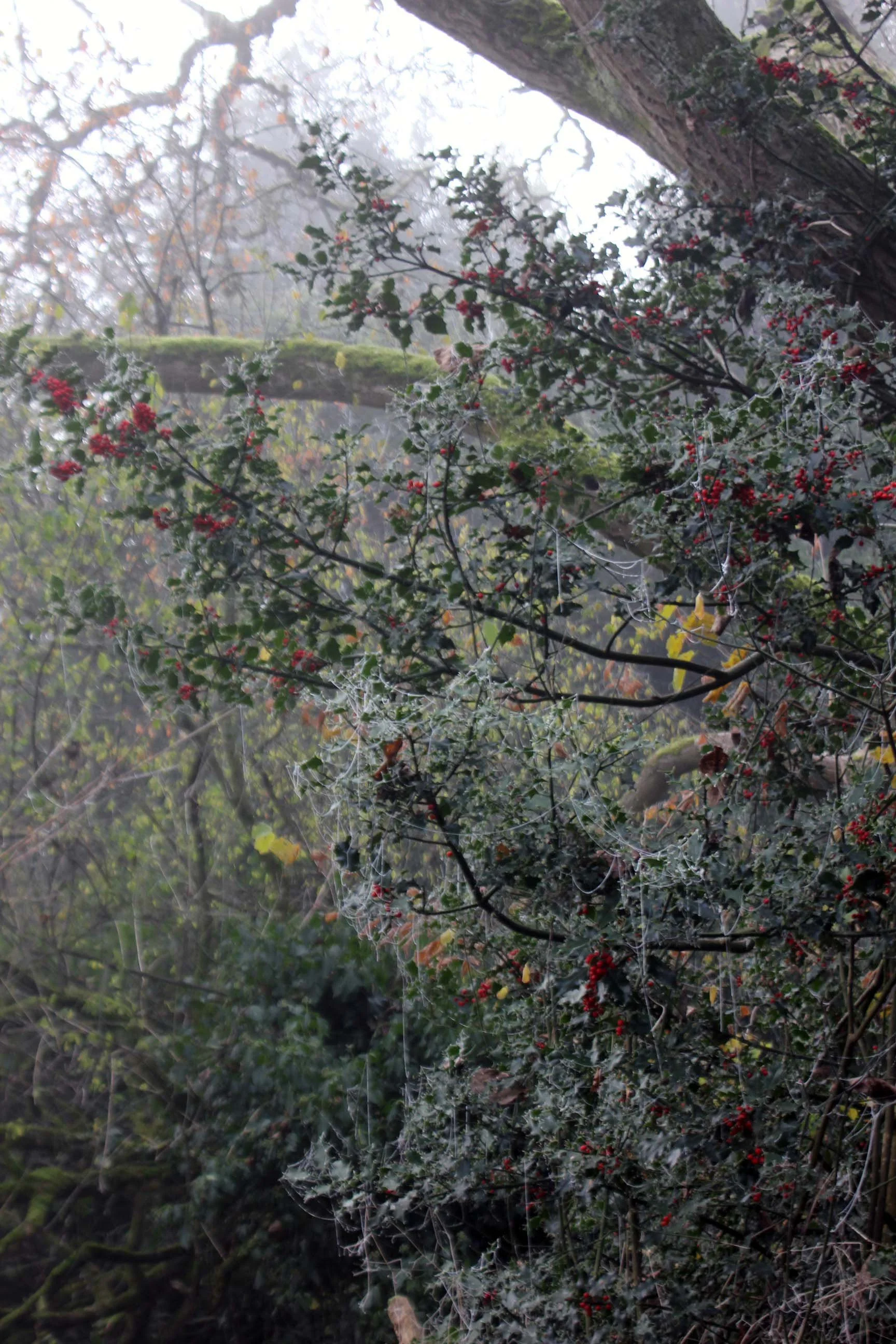
As the low winter sun touches the deeply reflective dark green leaves of the Holly, a cascade of glimmering light shines from the puckered prickly leaves, illuminating even the darkest corner of the thickest woodland.
Many of our Hollies have a prolific crop of blood red berries, ready for wintering Blackbirds, Mistle Thrushes and Greenfinch to have their fill. Hollies, historically, were of far greater importance than the mere berried sprig with which we decorate our Christmas pudding now. The Romans presented branches to their friends during the winter festival of Saturnalia; this commencing on the 18th of December. A custom which was later adopted by Christians who found the thorny leaves and scarlet berries symbolic of Christ’s sufferings. Being evergreen, Hollies are emblematic of immortality and it is said, provided a refuge for the Sylvan Dryads. Bringing Holly into the house offered a respite for these demi gods during the worst of the winter weather.
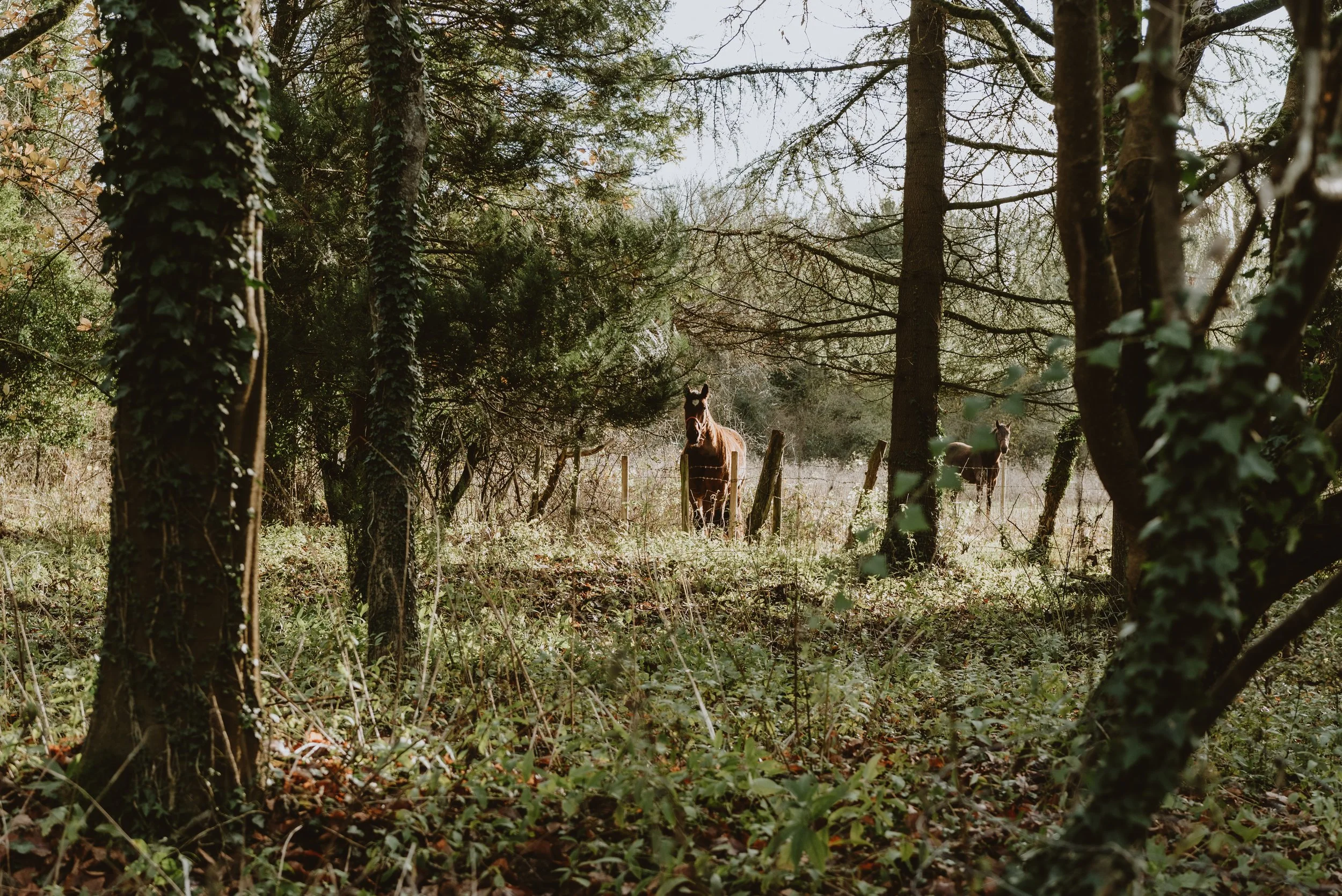
Ancient woodland, photography by Kate Cullen
The Holly was, in former times, so useful that large specimens were hard to find. The wood is the whitest of all British timber and was utilised for inlay turning, printing blocks and butter pats. Some believe that hanging Holly branches in a cow barn will prevent ringworm, something that we practice here.
In ancient Greece, the greatest prize for a famed poet was a crown made of Ivy. Newly married couples were also presented with wreath of Ivy, as a symbol of the closeness and constancy that should proscribe their lives together. Ivy, in medieval times, was defined as one of the ‘Herbs of St. John’, able to ward off evil spirits or the devil. It would be hung around the farm buildings and farm house for just this purpose.
Ivy, though sombre through most of the year, comes into own in October. The summer is spent and all other trees are declining into winter, but now the Ivy blooms in great clusters of yellow flowers. These are heavy with fragrance and are most attractive to a whole range of insects including Red Admiral butterflies and a recent arrival to the U.K., the Ivy Bee. This Bee emerges to coincide its flight period with the blossom of Ivy and can occur in large colonies on south facing slopes with bare areas.
Ivy does not suck nutrients from the trees upon which it grows; rather it uses them as a support so that it can develop into its branching, flowering mode. So different from the creeping form that it adopts on the woodland floor.
Our cattle, sheep and horses all seem to enjoy a nibble of Ivy but in excess it can apparently be poisonous.
If you see a little blue butterfly fluttering amongst trees and bushes in the warm sunshine, this will probably be the Holly Blue. The male has an all blue topside and the female is blue with black wingtips. There are two broods a year, with the spring generation hatching in April. The females lay their white disc shaped eggs on the flower buds of Holly. The caterpillars feed on the flowers and developing berries and pupate on the ground amongst leaf litter. The second generation will emerge in late July and August and the females will then lay their eggs on the flower buds of Ivy. The caterpillars feed up, pupating in the autumn and over winter as pupae, to emerge as one of our earliest butterflies in the spring.
This charming butterfly is thus a link between two once venerated plants. Spare a thought then, for the Holly Blue and do not cut all the climbing Ivy. Now is a good time to plant a few Holly trees for a future Christmas and the Holly Blues to come.
Words by Henry Edmunds F.R.E.S, edited by Susie Edmunds and Sally Newton.