
Duke of Burgundy
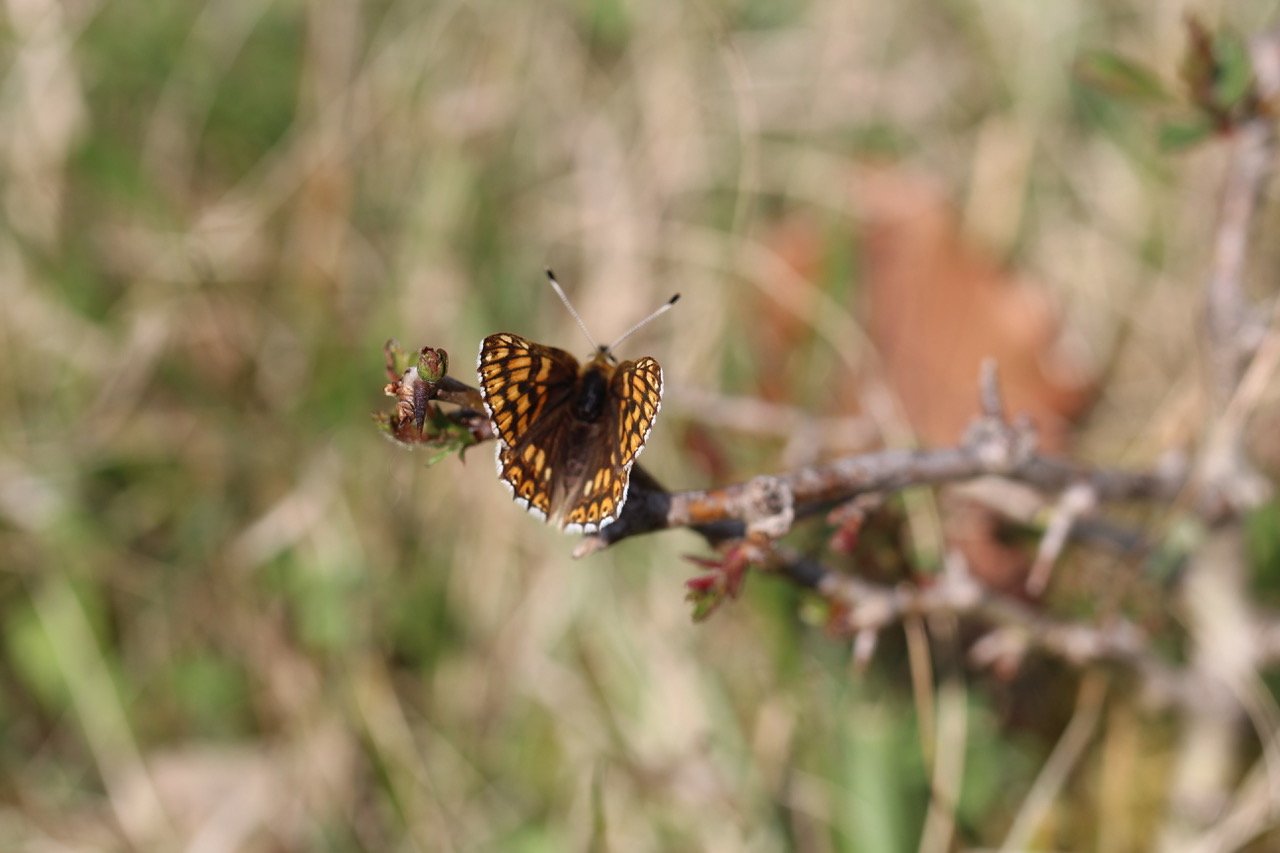
The Duke photographed by Henry Edmunds
This month, we are happy to reflect on the insects which fascinate us here on the Estate, as part of the Royal Entomological Society’s Insect Week.
Butterflies are always a firm favourite here, but one in particular stood out for a special mention this month. The Duke of Burgundy is a beautifully marked insect, resembling a Fritillary butterfly (and actually named as such until the 2000s) but in fact belongs to the Metalmark family. It can be identified by its distinctive checkered mahogany forewing.
This is a rare and declining species, listed on the GB Red List as ‘vulnerable’. Unfortunately the destruction of its habitat and the use of pesticides over recent decades has greatly impacted the population.
Here, we are fortunate to have several sites where the species thrives. This Spring (the best time to see them is late April and May), 8 were seen on just a small area of one very large locality.
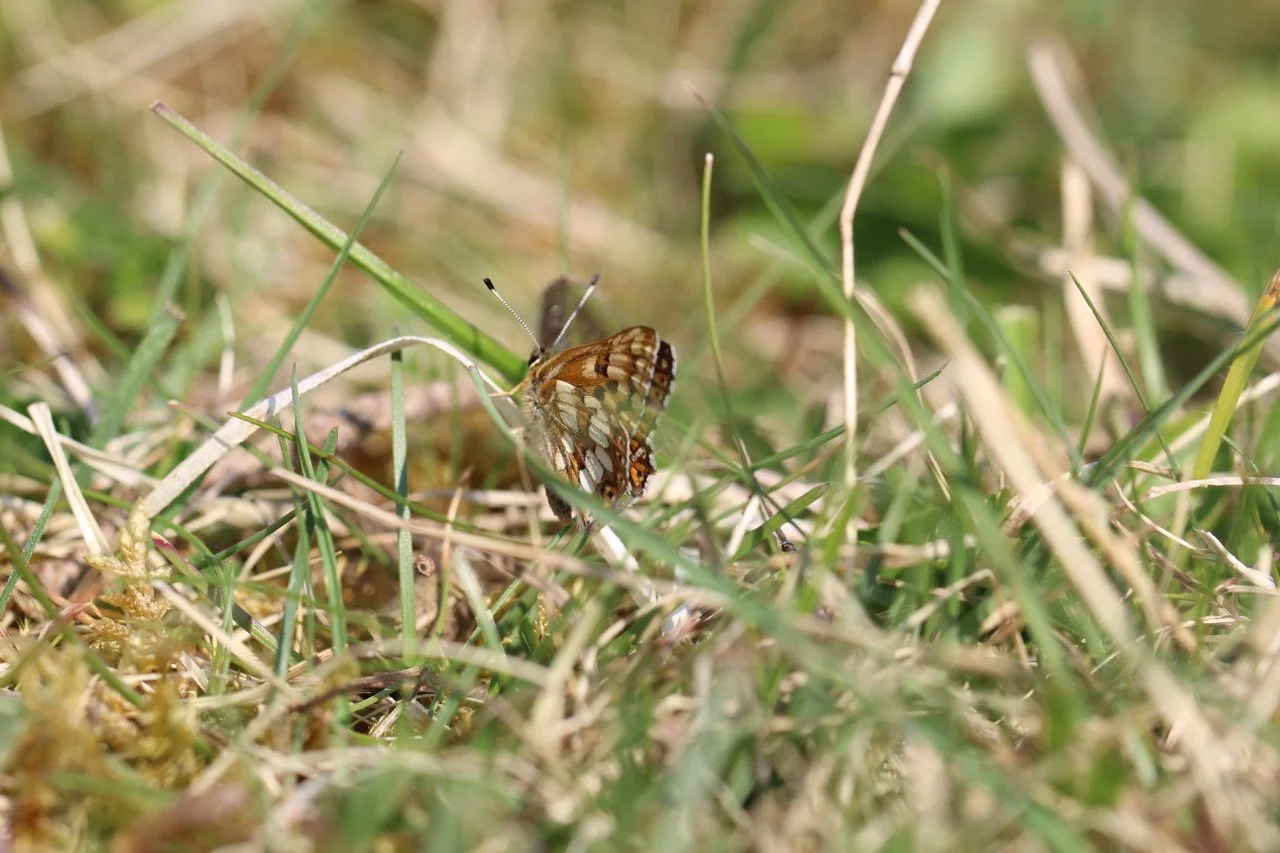
The underside of a Duke of Burgundy Fritillary by Henry Edmunds
habitat
The Duke’s larval food plant is Cowslip, however sensitive management of the habitat is needed to provide the right conditions. The Cowslip must be growing in shade to attract the insect, however if the shade becomes too great then the cowslips will die out, sadly taking the larvae as well.
We have found grazing to also be important. Some grazing is very helpful to prevent cowslips from being suppressed by aggressive grasses, but if the site is too heavily grazed then the larvae will again be crushed or otherwise eliminated. A fine balance!
There is lots to consider, but once there is a successful hatch of the butterflies, they prove themselves to be great colonisers. They happily seek out suitable habitat in the general area and are able to persist, even with very low numbers. This is why it is important to ensure that the food plant is established in many places to ensure alternative habitats are available.
WHERE TO SEE THEM
In late Spring, head to downland areas in England with abundant cowslip and scattered scrub. The larvae leave distinctive holes in the leaves of the food plant, so if these are spotted, the Duke may not be far away!
All good things comes to those who wait and this butterfly is no exception. They fly rapidy and soon disappear but a patient observer will be rewarded by standing still and carefully watching, they soon reappear.
Henry Edmunds, edited by Sally Newton